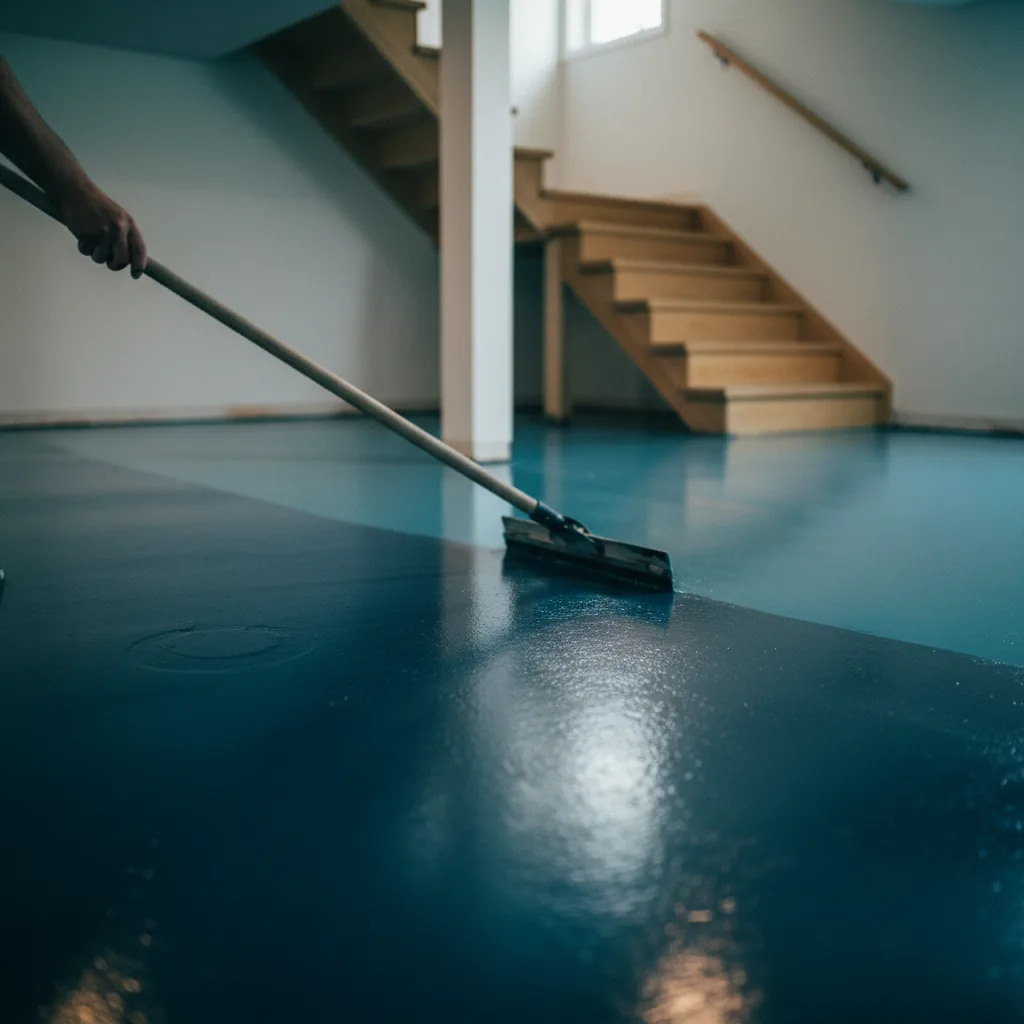
A basement slab sits right on the soil, so water vapor is always trying to move up through it. A coating that goes down before anyone checks how much can be pushed right off the floor.
Quick answer: A basement floor coating usually runs $4 to $9 per square foot. The wider range comes from moisture. A dry slab takes a standard system. A slab that pushes a lot of vapor needs a special primer first, and that adds cost. The real number comes after a moisture test.
A garage slab gets its abuse from the top: tires, salt, and oil. A basement slab gets it from below. Groundwater and damp soil sit under the concrete, and many older homes were built with no plastic vapor barrier under the slab. Water vapor rises through the concrete all the time. On bare concrete it just evaporates. Under a coating it gets trapped. If the pressure builds up, it pushes the coating off in bubbles and blisters. The post on epoxy over a moisture problem shows what that failure looks like.
Water also carries salts out of the concrete. When it dries at the surface, it leaves a white, fuzzy powder called efflorescence. If you see it on your floor or along the base of the walls, the slab is moving water, and that needs a close look before any coating goes down.
You can start with a simple test. Tape a square of clear plastic, about the size of a floor mat, flat to the bare slab with every edge sealed. Leave it for a day or so. If the concrete under it turns darker or drops of water form on the underside, moisture is coming through. It is a rough check. A calcium chloride test measures how much vapor comes up over a set time, and a probe test reads the humidity inside the slab. The moisture testing guide explains each one.
| What you see | What it likely means | What happens next |
|---|---|---|
| Plastic stays dry, no white powder | Low vapor, normal for a basement | A standard base coat and topcoat |
| Dark patch or droplets under the plastic | Vapor is coming through the slab | A primer rated to block that much moisture, then the coating |
| White crust on the floor or wall base | Water is carrying salts to the surface | Grind it off, find the water source, and test again |
| Wet cracks or puddles after a rain | Liquid water is getting in | Fix drainage or waterproofing first, then coat |
Liquid water is the one to fix first. Even with a moisture primer under it, a coating will not stop water that is running in. Gutters, downspouts, grading, and the sump pump come first.
Most basements hold the gas water heater and furnace. Solvent-based coatings give off vapor that can catch fire, and it settles low. No open flame or pilot light can run nearby while a solvent-based product goes down and cures. Follow the product sheet on shutting them off, and have a qualified person relight them. Low-odor and water-based products exist too, and they are worth asking about for a basement.
The coating stops at the rim of the floor drain and the sump pit so both still work and can be serviced. The slope toward the drain stays the same, so water still flows to it.
Paint and carpet glue have to come off by grinding. In a home built before 1978, have old floor paint tested for lead before it is ground. Old floor tiles and their black adhesive can contain asbestos in older homes. Get them tested before anyone disturbs them.
Most basement slabs have shrinkage cracks. Dry ones get filled and ground flat. Cracks that seep water are a waterproofing issue first. The concrete repair page covers how each kind is handled.
A basement is out of the sun, so plain epoxy holds its color there better than it does by a garage door. Metallic epoxy is popular for rec rooms and home bars because it gives a deep, marbled look. It is smooth, so it can be slick by a laundry sink. A full flake finish hides dust and lint and is the easy choice for laundry and storage rooms. A solid color with grit is the plain, low-cost choice for a utility space. You can compare looks on the decorative flake and metallic page, and read more in basement epoxy flooring in Madison and Madison basement floor epoxy.
A basement shares air with the rest of the house. Turn the furnace fan off during the install, or we can cover the return vents, so odor is not pulled upstairs. In cold weather, plan the shutoff so pipes do not freeze. Run fans that push air out a window or door. Keep the basement and the stairs closed to kids and pets until the product sheet says the floor has cured. Plan laundry around it too, since the washer and dryer usually have to move.
Call or text photos of the floor, the walls where they meet the slab, and the utility area. Tell us if the basement has ever had water in it. The estimate is free. For a closer look at the numbers, read basement epoxy floor cost. We coat floors in Madison, Sun Prairie, Fitchburg, Middleton, Verona and Waunakee.
It depends on where the water came from. If it came in once through a window well or a backed-up drain that has since been fixed, the floor can often be coated after it dries and tests well. If water still comes up through cracks or along the walls after a hard rain, fix that first. A coating does not hold back liquid water.
No. Filling cracks and sealing the slab can be part of a radon plan, but it does not replace a tested mitigation system. If you have a radon system, the pipe where it passes through the slab stays sealed, and the coating goes around it. Test for radon before and after any big basement project.
Old paint and adhesive get ground off so the coating can bond to clean concrete. Old nine-inch floor tiles and the black glue under them can contain asbestos in older homes. Have them tested before anyone grinds, sands, or scrapes them.
Light foot traffic comes first, and heavy furniture and appliances come later. The product sheet gives the times. Use felt pads under furniture legs, and skip rubber-backed rugs for the first while, since some rubber backings can stain a fresh coating.
Not much. A coating is thin and does not insulate. It does stop the dust, seal in stains, and make the floor easy to mop. For a warmer feel, area rugs on top of the coating work well once it has fully cured.