Tips for garage floors that take road salt, slush and snowmelt all winter. Call or text a few photos of the floor, and the estimate is free.
Verona, home to about 14,000 people, lies southwest of Madison. Winters are long here, and each car that pulls in brings road salt and slush with it. A sealed coating keeps that brine on top of the floor instead of soaking into the concrete, but winter care still matters.
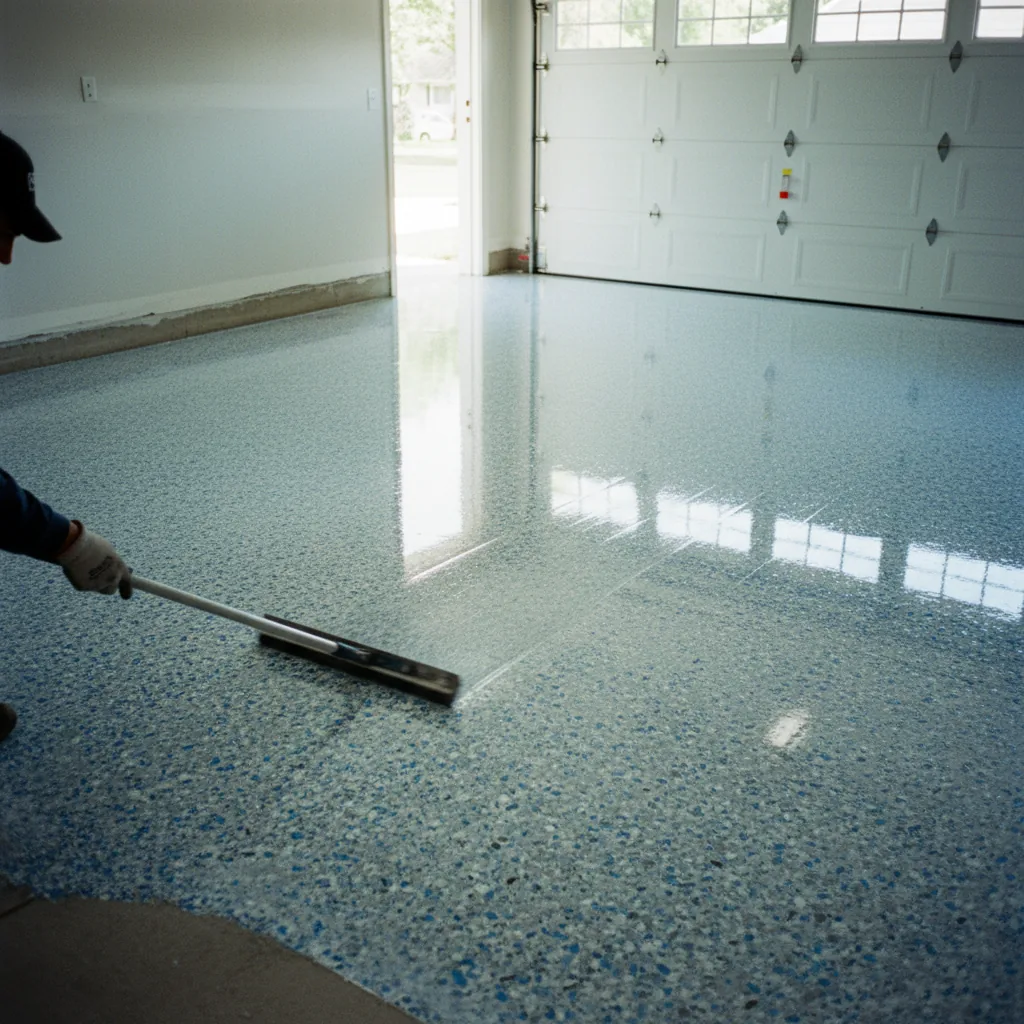
Salty meltwater soaks into bare concrete. When it freezes and thaws again and again, the top of the slab starts to flake and pit. That damage is called scaling. Deeper holes are called spalls. A coating seals the surface, so the brine stays on top where you can clean it off.
Pooled slush can refreeze overnight and turn slick. On mild days, push it toward the door or a drain with a squeegee. A containment mat under each car catches melt before it spreads across the floor.
Dried salt leaves a white film on the floor. A rinse with plain water and a mild cleaner, then a squeegee, is usually enough. Skip harsh acid or citrus cleaners unless the coating maker says they are safe.
If your slab already has pitted or flaking patches, those get ground back and filled before the coating goes on. Coating over loose concrete only traps the problem under a new surface.
Garage Floor Coating · Polyaspartic Floor Coating · Basement Floor Coating · Concrete Repair & Crack Filling · Commercial & Industrial Floor Coating · Decorative Flake & Metallic Coating
Prices for each are on the cost guide.
53593
They help. A mat with raised edges under each car holds melt in one spot, so less brine spreads across the floor and toward the door into the house.
Only if the slab and the air stay inside the product's temperature range for the whole job and the cure. In an unheated garage that often means waiting for spring, since forcing it with a portable heater is unsafe and risks a bad cure.
It keeps salt from soaking in, which is what causes the pitting. You will still see dried salt on top until you rinse it off.